
Spending wisely in free-to-play games
Free-to-play games such as RAID: Shadow Legends earn their money from optional purchases, many of which are random. Spending in games is your decision. These steps help you keep it deliberate.
By Barbara Bailey. Published .
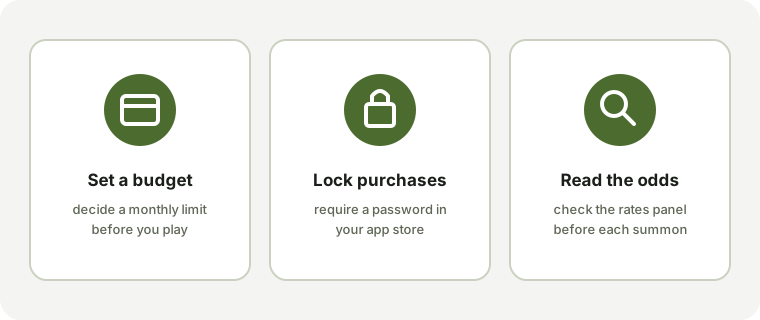
1. Set a budget before you start
Decide on a monthly amount you are comfortable spending, which may be zero, and write it down. Time-limited offers are designed to prompt quick decisions. A limit you set in advance is easier to stick to than one you set in the moment.
2. Lock purchases on your device
- iPhone and iPad: in Settings, Screen Time lets you restrict in-app purchases or require a password for them. For children, “Ask to Buy” through Family Sharing requires a parent’s approval.
- Android (Google Play): in the Play Store settings you can require authentication for every purchase. Parental controls and Google Family Link allow approval of children’s purchases.
- PC: avoid saving a payment card in launchers you share with others.
Menu names change between system versions. Your device maker’s help pages have the current steps.
3. Read the odds
Many games, RAID included, show the odds for random summons. A 0.5% chance means that, on average, you need about 200 attempts for one success, and some players will need many more. Treat a random purchase as paying for a chance, never for a guaranteed result.
4. Recognise pressure tactics
- Countdown timers on offers
- “Exclusive” or “one-time” bundles
- Prices shown in gems rather than money, which hides the real cost
- Events where the top rewards need far more resources than free play provides
Seeing these is not a reason to panic. It is a reason to check your budget.
5. Get help if you need it
If in-game spending is causing you money worries or distress, talk to someone you trust and consider contacting a consumer-advice or gambling-support service in your country. For cross-border consumer problems in the EU, the European Consumer Centres Network offers free advice.